
 Back to Resources
- July 5, 2026
- 11 Min
Numerical Odds for Book of 99 Slot Explained
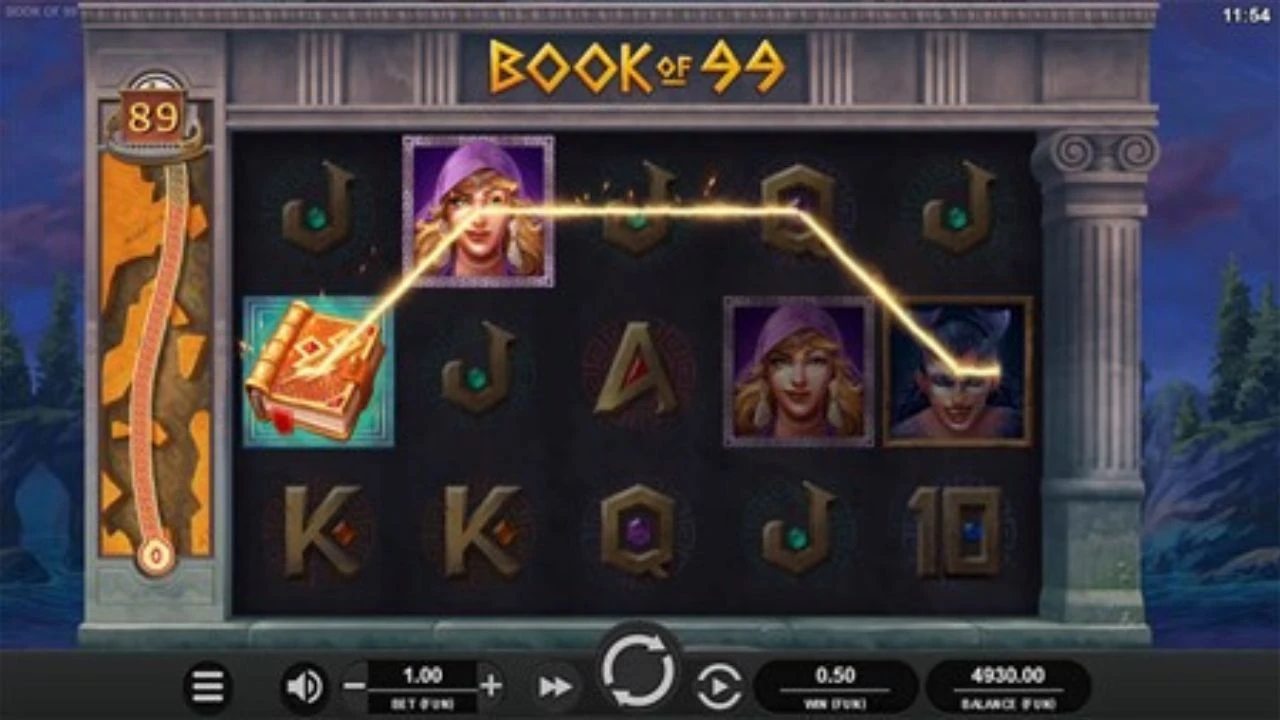
For a user who considers numbers, the first question about any online slot is always the same: what are the odds? Slot Book Of 99 Max Bonus renders this question particularly interesting. It breaks the standard slot machine formula with a core feature—a Return to Player (RTP) rate that shifts, influenced by the players themselves. Most slots have a fixed house edge, a permanent rule coded into their software. Book of 99 is unique. The combined action of everyone playing can drive the RTP from a starting point up to a theoretical peak of 99%. That number is unusual in this industry. This article dissects the math that enables this to happen. We’ll describe the numbers behind the symbols and paylines, and also the unique probability engine that allows the RTP to evolve and rise. This extends beyond a simple paytable check. We’ll examine what volatility and hit frequency mean in practice, and how the special expanding symbol functions. The aim is to give you a clear picture of your actual chances when you rotate the reels on this game.
Understanding RTP and Its Distinctive Fluctuation
Return to Player (RTP) is the cornerstone of slot math. It reveals the proportion of all money wagered that a slot will pay back over a extended period, often across countless spins. A typical slot has a fixed RTP, maybe 94%, 96%, or 97%. Book of 99 defies that convention. It commences at a base RTP that climbs higher as players, together, attain achievements in the game. This is hardly a personal boost. It’s a global upgrade introduced to the game’s core mathematics for all players. The mechanism likely functions by taking a minuscule fraction from each bet and adding it to a communal pool. When that pool hits certain targets, the game’s underlying algorithm changes for good, programmed to pay out more. This signifies the chance of hitting winning combinations, and the average size of those wins, improves slightly over time. It’s a significant transformation. The game shifts from a zero-sum setup to a collaborative system. The community’s play boosts directly the expected value of every spin that occurs later, progressively steering it toward that legendary 99% mark.
Volatility and Win Rate in Book of 99
RTP indicates *how much* you can anticipate over the long run. Risk, or variance, explains *how* those returns come—the pattern of wins and losses. Book of 99, true to its “Book of” family roots, is a volatile slot. Wins are rare, but when they do, they can be far greater. The hit frequency, the rate at which any winning combination lands, is mathematically set to be low. The game generates its excitement around the wait for the Free Spins feature and the special expanding symbol. In the base game, you may encounter many spins without a win. The math model compensates for this by guaranteeing that when a win or a bonus trigger finally happens, it can be substantial to make up for the dry spell. Comprehending this high-volatility nature is critical. It should influence your bankroll strategy. You should have a budget that can endure quiet periods, knowing the game’s main profit opportunity for you lies in the massive payout of the bonus round, not in a sequence of small, steady wins.
A Progressive Symbol Likelihood Engine
The actual winning power in Book of 99 lives in its special expanding symbol, a element derived from the famous “Book of” slot group. In the Free Spins stage, one symbol is selected at random to act as this special symbol. At the beginning of the round, each of the ten paying symbols has the same opportunity at being selected. Once chosen, this symbol carries out two functions. It delivers for any match, and, more importantly, it grows to fill a whole reel when enough of them land. The mathematical action takes place when a high-paying symbol is selected and then appears in big numbers on the reels during free spins. The spread can produce several full-reel wins at the identical time. The game’s algorithm works out the odds of getting 3, 4, or 5 of these particular symbols. The payout multipliers that apply when they expand can activate the game’s maximum win. This mechanic packs the game’s volatility into the bonus feature. One lucky choice and one solid spin can deliver a massive return.
Breakdown of Prize Table and Symbol Chances
A review at the Book of 99 paytable offers you valuable knowledge into its adjusted chances. The premium symbols, items like scarabs or deities, are set to appear less often than the less valuable card pictures (10, J, Q, K, A). This weighting is managed by the slot’s Random Number Generator (RNG). The RNG allocates a specific amount of virtual “stops” on each reel to every picture. A basic symbol receives more stops, which raises its likelihood of showing up in any spot. The Book scatter is the most crucial. Its chance is set to trigger free spins at a pace that fits a volatile design—usually approximately once every 100 to 200 spins on average. Note this crucial point: as the global RTP increases through community achievements, these underlying frequencies and balances are tweaked. The game doesn’t add new icons. Instead, it modifies the worth of winning groups or the chance of premium symbols landing. This improves the anticipated value without modifying the core experience of a spin.
How the 5×3 Grid and 10 Paylines Impact Odds
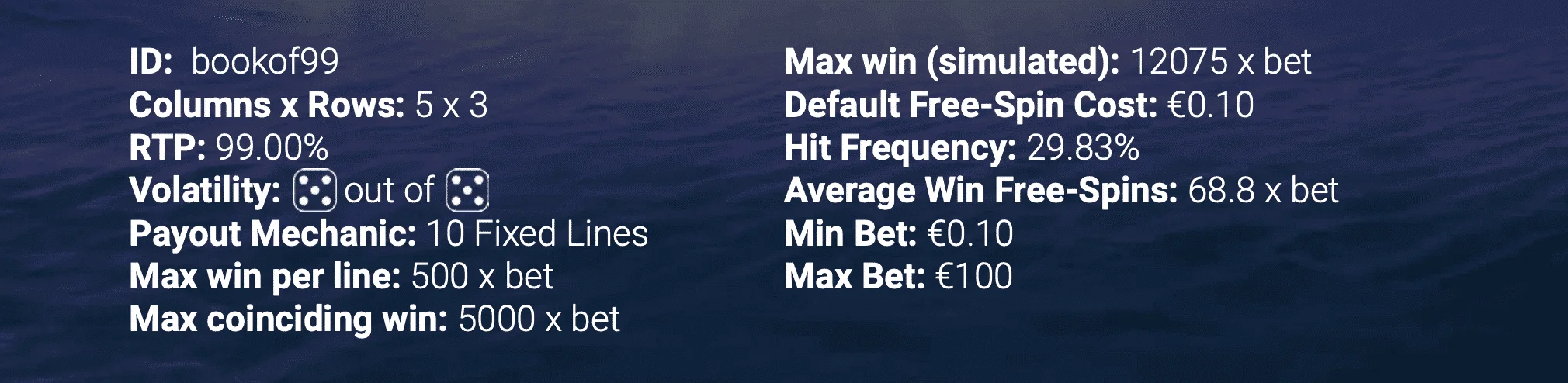
The game’s configuration—a conventional 5-reel, 3-row grid with only 10 predetermined paylines—fundamentally shapes its mathematical profile. Possessing a limited number of paylines, in contrast to slots with hundreds of “ways to win,” makes the probability calculation simpler but stresses precise symbol alignment. A winning combination has to land on one of these designated 10 lines, from left to right. This design choice intensifies the volatility. The RNG chooses the symbol for each of the 15 positions on the grid. Then the game reviews each of the 10 lines one by one. The odds of lining up high-tier symbols on a specific payline are intentionally low, which contributes to the game’s hit frequency. This setup makes every payline win counts. The Free Spins feature uses this grid excellently. When a special symbol expands, it can meet multiple payline conditions across several reels at once. This converts a modest number of paylines into a pathway for huge, screen-filling wins. The calculation here is distinct from slots that use “ways” or “cluster” pays systems.
Determining the Chances of Activating Free Spins
The door to the most rewarding part of Book of 99 is the Free Spins round. You activate it by landing three or more Book scatter symbols in any position the five reels. The chance of this event is a set parameter in the game’s math model. Developers set how often the scatter symbol appears on each reel to hit a specific trigger rate. Given the game’s high volatility, we can guess this rate is fairly low, maybe approximately in the ballpark of 1 in 150 to 1 in 200 spins on average. This isn’t a cycle or a timer. It’s a statistical average over a huge number of spins. The calculation involves the independent probability of the scatter appearing on each reel and all the possibilities that produce at least three scatters. Frame it like this: you are never “due” a trigger after 190 spins. Each spin is its own event with the same small probability. But over a extended session, the law of large numbers says your experience will move toward that underlying average frequency. And that average frequency itself might become better as the global RTP climbs.
Highest Payout Potential and Its Numerical Rarity
Book of 99 features a considerable maximum win, often advertised as a huge multiplier of your bet. Hitting this win is an event of extreme mathematical rarity. Understanding this rarity is essential for sensible play. The path to the max win needs a precise sequence. First, you must trigger the Free Spins feature. Then, the highest-paying symbol must be randomly chosen as the special expanding symbol. Finally, you need to land a perfect set of five of these symbols on all reels during the free spins, likely with extra retriggers for more spins. Each step multiplies the improbability of the last. The chance of the special symbol selection is 1 in 10. The odds of then filling the screen with that exact symbol are astronomically small. The RNG must select it for all 15 positions independently, a probability measured in tiny fractions of a percent. This extreme volatility is intended to offer life-changing win potential. But its mathematical reality means it’s an event most players will never see, comparable to a lottery jackpot inside a slot machine.
Tactical Implications for Money Management
Comprehending the mathematical design of Book of 99 leads directly to a practical, strategic method to your bankroll. The high volatility calls for a conservative plan. Consider these aspects to tailor your play with the game’s probability model.
- Establish your bet size so your session bankroll can endure potentially long stretches without a big win. A common rule is to have at least 200 to 300 times your bet per spin ready for the session.
- Pursue the bonus feature with patience, not panic. Knowing the average trigger rate assists you avoid the trap of raising your bets to “force” a trigger. That is ineffective mathematically and drains your funds faster.
- See the rising global RTP as a long-term community gain, not a short-term personal promise. It improves expected value over thousands of spins, not your next ten.
- Establish clear loss limits and win goals based on percentages of your bankroll, not on feelings. The “one more spin” mindset contradicts probability-based play.
- Keep in mind, the maximum win is a marketing extreme. Anchor your enjoyment and strategy on the more common smaller wins and bonus triggers, not on the near-impossible jackpot.
FAQ
What precisely does the 99% RTP signify in Book of 99?
The 99% RTP is the maximum achievable Return to Player the game can reach. It’s not the starting point. The base RTP is lower. As players around the world reach certain in-game targets, the RTP for everyone permanently increases, step by step, moving toward that 99% figure. It denotes a long-term average payout across millions of spins at the maximum level.
Is the expanding symbol during free spins truly random?
Yes. The selection of the special expanding symbol at the start of the Free Spins round is processed by a certified Random Number Generator (RNG). Each of the ten regular paying symbols has an equal chance, 1 in 10, of being picked. This choice is independent of your previous spins, your bet size, or any other factor. It guarantees the outcomes are fair and unpredictable.
How regularly can I expect to trigger the Free Spins feature?
Because Book of 99 is a high-volatility slot, the Free Spins feature occurs less often than in low-volatility games. Based on its math model, the average trigger rate is about once every 150 to 200 spins. This is a long-term statistical average. In a short session, you might trigger it more frequently, or you might go much longer without seeing it. Every spin is an independent event.
Does placing larger bets improve my likelihood of triggering the bonus?
Not at all. The chance of triggering the Free Spins bonus does never depend on your bet size. The RNG determines outcomes based on symbol values, not on how much you stake. Increasing your bet does boost the potential payout from the bonus if you trigger it. But it does never make the scatter symbols any more probable to show up on the reels.
How does the community achievement system actually work?
The exact technical workings are confidential to the developer. But the system works by collecting a microscopic portion of every bet placed worldwide into a collective progress meter. When the community completes that meter to a predefined total, the game’s core math model is enhanced. This increases the RTP for all future spins. It’s a shared, permanent enhancement unlocked through combined gameplay volume.
Is it possible to calculate my exact odds of winning on a single spin?
You are unable to calculate exact real-time odds for one spin. A key variable, the current global RTP level, is variable and not displayed in real-time. Furthermore, the complex symbol values and RNG process are not transparent. You can comprehend the general odds, like hitting five of a kind or triggering free spins. But you can’t know a precise, moment-to-moment percentage.
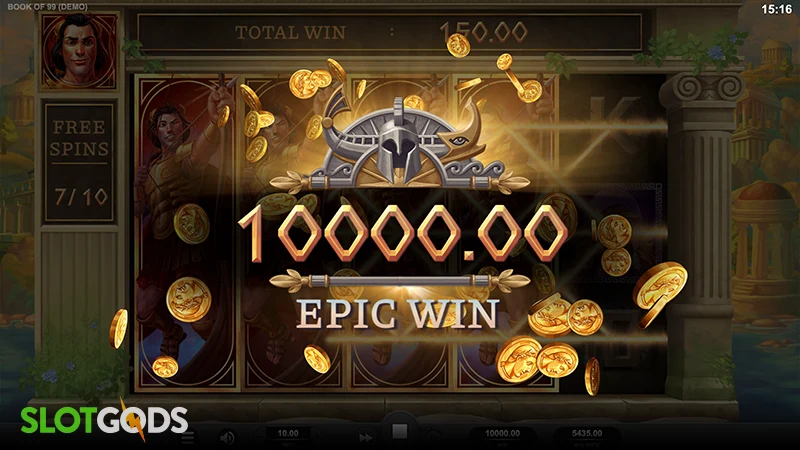
Book of 99 slots together conventional slot mechanics and novel, player-driven systems. Its primary draw is a adjustable return-to-player rate , a high-risk structure focused on a profitable expanding symbol mechanic, and a clear 5×3 grid layout. When you grasp the chances of winning lines, symbol values, and bonus activation, you can approach the game with practical expectations. The math points to a definite approach. Handle your bankroll for the extended play. Pursue the bonus free spins patiently. View the legendary 99% RTP as a collective long-term aim, not an instant promise. This knowledge alters the experience. It moves you from just wishing for fortune to interacting with one of the more mathematically distinct slots you can try.
Impactful Reads